Salem Witch Trials
John Proctor: First Male to be Accused of Witchcraft
By Lori, History writer & tour co-founder • October 2026 • 10 min read
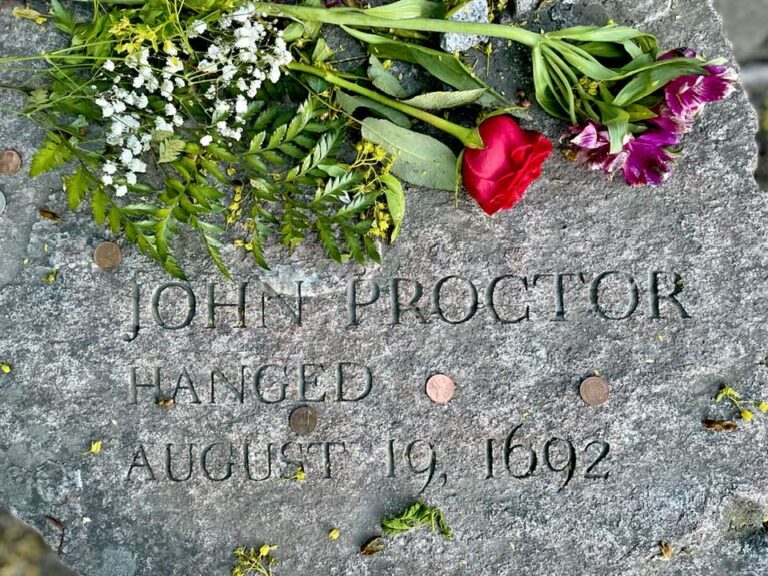
One of the most well-known victims from The Crucible, but almost everything most people “know” about John Proctor comes from Arthur Miller’s fictional story, not the historical record. The real John Proctor was a blunt, prosperous tavern-keeper who made one fatal mistake: he said out loud, to anyone who would listen, that the afflicted girls were liars.
Separating the real Proctor from the fictional one is exactly the kind of thing we love to do on our Salem Witch Trials walking tour — because the true story is more damning than the drama. This was a man destroyed not by a secret affair, but by telling the truth.
JOHN PROCTOR AT A GLANCE
WHO – A wealthy farmer and tavern-keeper near Salem (now Peabody)
DISTINCTION – The first man accused of witchcraft in 1692
WHY – He openly called the afflicted girls frauds and liars
THE CRUCIBLE – His affair with Abigail Williams is fiction — invented by Arthur Miller
EXECUTED – Hanged at Proctor’s Ledge, August 19, 1692
A prosperous man with sharp opinions
John Proctor was born in Assington, England, in 1631 and came to Massachusetts as a child. By middle age, he had built the kind of life that commanded respect: in 1666 he leased a sprawling 700-acre farm near Salem, and in 1668 he opened the Proctor Tavern on the Ipswich Road, which made him genuinely wealthy. He married three times and was, by every account, a confident, outspoken man who said what he thought. Years earlier, in 1676, he had even testified against Giles Corey in the beating death of a farmhand. Proctor was not a man who stayed quiet, and in 1692, that would cost him his life.
The man who called the girls liars
When the hysteria erupted, Proctor didn’t hide his contempt for it. He told people flatly that the afflicted girls were frauds, and that their fits were playacting. He had reason to believe it: when his own servant, Mary Warren, began having fits, Proctor kept her at the spinning wheel and threatened to thresh the devil out of her, and, tellingly, her fits stopped whenever he kept her busy and close to home. In a conversation a neighbor later reported to the court, Proctor’s view of the accusers was blistering:
“If they were let alone so we should all be devils and witches quickly… hang them, hang them.”
— John Proctor, as reported in court testimony, 1692
He meant the girls should be punished as liars. In Salem in 1692, saying so out loud was almost a confession in itself. When Proctor left home on business, Mary Warren’s fits conveniently returned, and she took her place among the accusers.
The first man accused
The blow fell through his wife. In early April, Proctor’s pregnant wife Elizabeth was accused and hauled before the court. During her examination, the accusers abruptly turned their cries on her husband, pointing to “Goodman Proctor” and declaring him a wizard. Asked what he had to say, Proctor gave the only answer he ever would:
“I know not. I am innocent.”
— John Proctor at his wife’s examination, from the court record, April 1692
On April 11, 1692, he was indicted, the first man named as a witch in the entire ordeal. A wealthy, respected tavern-keeper had become proof that no one, man or woman, was safe.
WHAT THE CRUCIBLE GOT WRONG
There was no affair with Abigail Williams
Arthur Miller’s 1953 play The Crucible gave John Proctor a love affair with his accuser, Abigail Williams, and made jealousy the engine of the tragedy. It makes for unforgettable theater, but it never happened. In 1692, John Proctor was about 60 years old, and Abigail Williams was around 11, and there’s no evidence the two had ever even met before the trials. Miller admitted he invented the relationship, inspired by a single dramatic gesture he read in the court records. Powerful fiction, but fiction. The real Proctor was condemned for his honesty, not his sins.
A whole family in chains
As with so many 1692 cases, the accusation metastasized through the family. Three of the Proctor children, Benjamin, Sarah, and William, were accused and arrested, along with Elizabeth’s sister and sister-in-law. Dozens of neighbors signed a petition swearing the Proctors had always lived a good, Christian life. It was ignored. And Proctor’s teenage son William was tortured, bound neck and heels until the blood ran from his nose, in an effort to force a confession out of him.
The letter that helped end the trials — too late
From his cell, Proctor did something extraordinary. On July 23, 1692, he wrote a letter to the clergy of Boston, pleading for the trials to be moved or the judges replaced, and laying bare the torture being used to manufacture confessions, including against his own son and the Carrier boys. He called it what it was:
“They tied him neck and heels till the blood gushed out at his nose… These actions are very like the popish cruelties.”
— John Proctor’s letter to the Boston clergy, July 1692
The letter had an effect. On August 1, eight Boston ministers met and began to turn against the use of spectral evidence, the ghostly “proof” that had condemned nearly everyone. It was the beginning of the end of the trials. But for John Proctor, it came too late.
August 19, 1692
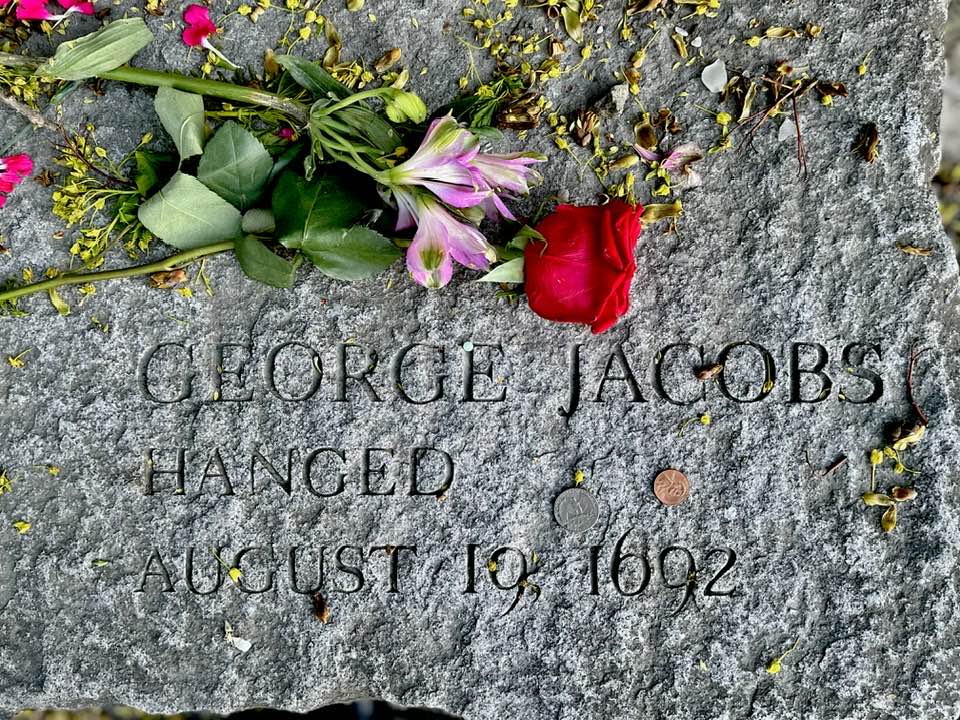
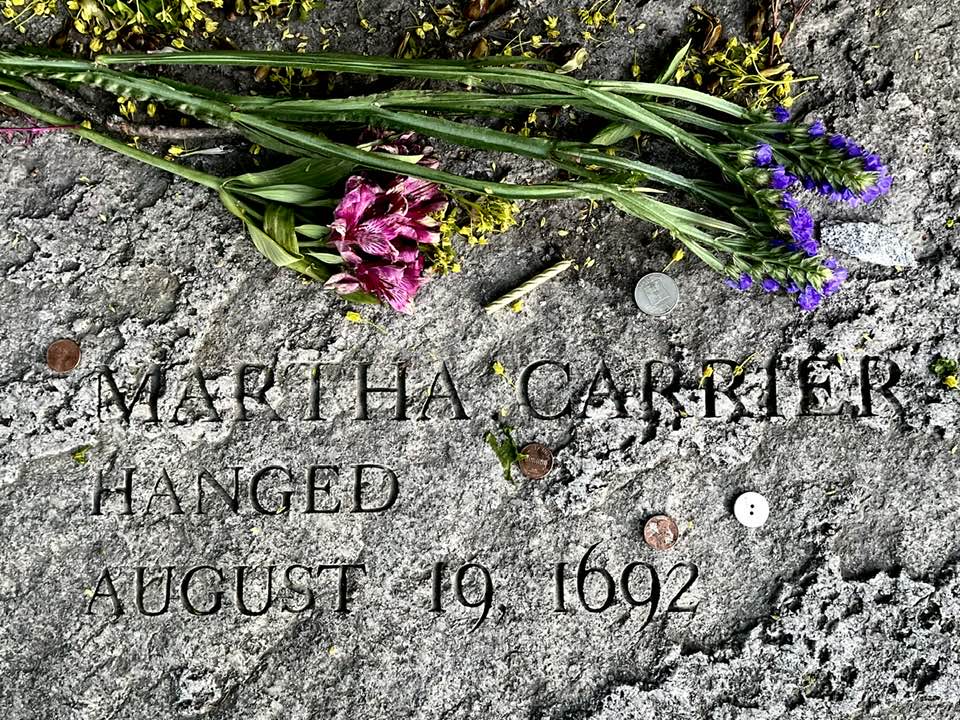
John and Elizabeth Proctor were both convicted on August 5, 1692. On August 19, John was taken to Proctor’s Ledge and hanged alongside four others: Reverend George Burroughs, George Jacobs Sr., John Willard, and Martha Carrier. Family tradition holds that his relatives recovered his body and buried it quietly on Proctor land in what is now Peabody.
Elizabeth's long fight back
Elizabeth Proctor was spared the gallows only because she was pregnant; the court delayed her execution until after the birth, and by then the hysteria had collapsed. She gave birth in jail in January 1693 and was released that spring. But her ordeal wasn’t over. Because of the convictions, the Proctors had been stripped of their legal rights, their goods seized to pay prison fees, and Elizabeth discovered John had even written her out of his will, almost certainly expecting her to hang beside him. Left penniless, she fought for years, and finally, in 1697, won back her legal rights and her dowry. She lived on, and later remarried, a rare survivor of a story that killed so many.
WALK HIS STORY
Hear the real John Proctor's story where it happened
Our historian-led 1692 Salem Historical Tour tells the true stories of John Proctor and the other victims on the very streets where the trials unfolded. Two hours, all ages, $35 adults / $10 kids.
Frequently asked questions
John Proctor was a wealthy farmer and tavern-keeper who lived near Salem (in what is now Peabody) and was the first man accused of witchcraft during the 1692 Salem Witch Trials. An outspoken critic of the trials, he was hanged on August 19, 1692.
No. The affair between John Proctor and Abigail Williams was invented by Arthur Miller for his 1953 play The Crucible. In reality, Proctor was about 60 and Abigail was around 11 during the trials, and there is no evidence the two had ever met before 1692. Miller himself acknowledged that he created the relationship for dramatic effect.
John Proctor was an open and vocal opponent of the trials who publicly called the afflicted girls frauds and liars. His outspoken skepticism — and his harsh treatment of his servant Mary Warren, who had fits — made him a target, and the accusers turned on him during his wife Elizabeth’s examination.
Yes. On July 23, 1692, Proctor wrote to the clergy of Boston, begging for the trials to be moved or the judges replaced and documenting the torture used to force confessions, including against his own son William. The letter helped prompt Boston ministers to question the use of spectral evidence, but it came too late to save him.
John Proctor was hanged on August 19, 1692, at Proctor’s Ledge, alongside George Burroughs, George Jacobs Sr., John Willard, and Martha Carrier. His wife Elizabeth was also convicted but was spared because she was pregnant; she gave birth in jail and survived the trials, later winning back her legal rights.
Sources & further reading
This article draws on the original 1692 court records and firsthand accounts. To read the primary sources yourself:
- John Proctor’s court records (SWP No. 107) — Salem Witch Trials Documentary Archive, University of Virginia.
- The Salem Witch Trials Documentary Archive and Transcription Project — the full collection of original court records and transcriptions from 1692.