Salem Witch Trials
Ann Pudeator: The Wealthy Widow Whose Healing Became Witchcraft
By Lori, History writer & tour co-founder • October 2026 • 9 min read
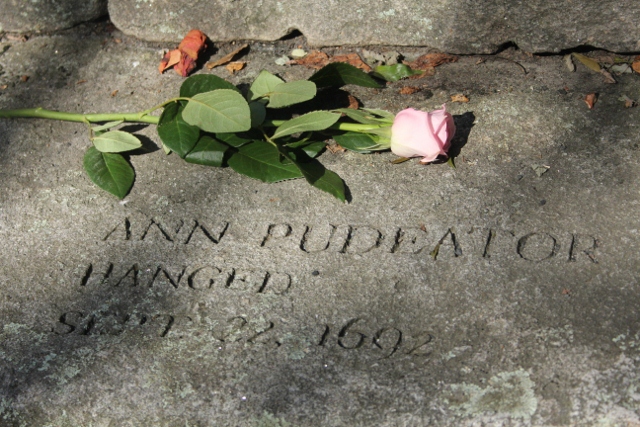
She had everything to mark her as a witch: money, independence, medical skill, and a past the town loved to whisper about. So when the constable searched Ann Pudeator’s house and found jars of ointment, the ordinary supplies of a midwife and healer, the court decided it had found the devil’s own medicine. A wealthy, twice-widowed woman who knew how to heal.
Her case is a clear-eyed look at who the trials really went after, and one we return to often on our Salem Witch Trials walking tour. Ann Pudeator was no outcast beggar. She was a respected woman of property — and that, it turned out, was no protection at all.
ANN PUDEATOR AT A GLANCE
WHO – A wealthy, twice-widowed Salem midwife and property owner
ACCUSED – By Mary Warren, in May 1692
THE “EVIDENCE” – Her healing ointments, old gossip, and a known liar’s word
HER DEFENSE – She proved a key accuser was a recorded liar, and was ignored
EXECUTED – Hanged September 22, 1692 — the final hangings
A healer and a property owner
Ann Pudeator was born around 1621, probably in England, and lived a long life before the trials ever touched her. With her first husband, Thomas Greenslit, she raised five children; after he died in 1674, she supported herself as a midwife and nurse, skilled and respected work in a colony with few doctors. That work led to a second marriage that Salem never quite forgot: hired to care for the ailing young wife of a blacksmith named Jacob Pudeator, Ann married Jacob soon after the woman died, a husband nearly twenty years her junior. When Jacob himself died in 1682, he left Ann his estate. By 1692 she was a woman of real property, owning two parcels near Salem Common. Independent, wealthy, older, and a healer, to a frightened town, that was a dangerous combination.
A target by design
It’s worth pausing on how perfectly Ann Pudeator fit the witch hunt’s profile. The trials rarely struck at random; again and again, they found the same kind of woman, often older, often widowed, often independent, and frequently someone with knowledge of herbs and healing that could look, to the fearful, like power of another sort. Add property worth coveting and decades-old gossip about a scandalous marriage, and Ann Pudeator had quietly become a woman some of her neighbors were only too glad to see accused.
Accused, released, and dragged back
The first accusation came from Mary Warren in May 1692, who named Ann Pudeator alongside Alice Parker. Pudeator was arrested, and the record suggests she may actually have been released for a time, only for people with a grudge against her to push for her re-arrest. She was named again in June during Sarah Churchill’s confession, and on July 2, 1692, she was questioned a second time at Beadle’s Tavern. That examination survives, and in it she gave the court flat, unwavering denials:
“I never saw the devil’s book, nor knew that he had one.”
— Ann Pudeator at her examination, from the court record, July 1692
When soap became sorcery
The most telling “evidence” against her was found in her own home. When the constable searched the house, he reported finding some twenty pots of ointment, each in a separate container, and in 1692, jars of unexplained salves were treated as proof of witchcraft. Ann had a perfectly ordinary answer: the containers held grease and oil for making soap. She insisted she kept nothing stranger than everyday household stock:
“I never had ointment nor oil but neatsfoot oil in my house since my husband died.”
— Ann Pudeator, explaining the jars found in her home, 1692
It should have ended there. Soap-making grease and a healer’s supplies are not evidence of anything but a working household. But the constable insisted the ointments were “of several sorts,” and the court let the suspicion stand. A midwife’s ordinary trade had been turned into a case for her execution.
Condemned on borrowed lies
At her trial in September, the testimony was a familiar parade of the absurd. One neighbor claimed he’d seen a woman who looked like Ann fly into her house at night. The Best family blamed her for a mother’s long illness and death, and for a petty quarrel over driving cattle. Mary Warren accused her of killing several people by witchcraft, including her own late husband. On that foundation, Ann Pudeator was indicted and, on September 10, found guilty and sentenced to hang.
She named the liars
Ann Pudeator did not go quietly. After her conviction, she petitioned the court, and rather than simply beg, she attacked the credibility of the men whose word was killing her. One of her chief accusers, she pointed out, was a documented liar:
“The evidence… were all of them altogether false & untrue… the said John Best hath been formerly whipped and likewise is recorded for a liar.”
— From the petition of Ann Pudeator, September 1692
It was a sound legal point: she was being sent to the gallows on the testimony of a man the record itself branded untrustworthy. In any sane court, it would have mattered. In Salem in 1692, it changed nothing. Her sentence stood.
September 22, 1692
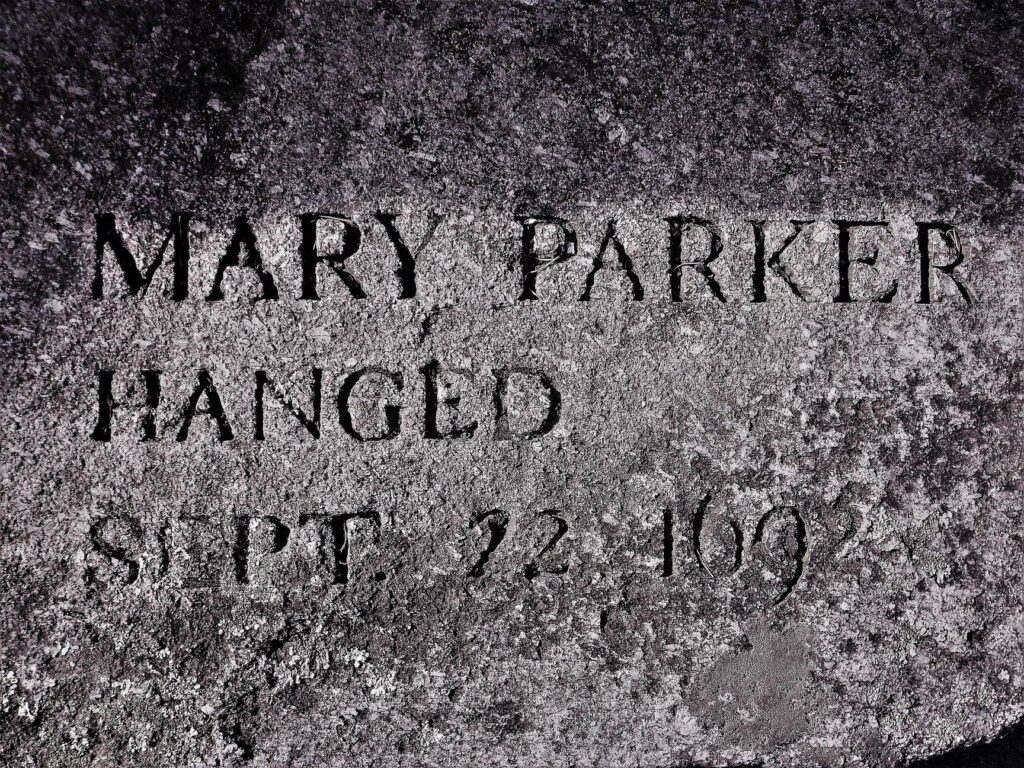
On September 22, 1692, Ann Pudeator was taken by cart to Proctor’s Ledge with seven others, among them Mary Esty, Martha Corey, Alice Parker, Mary Parker, Wilmot Redd, Margaret Scott, and Samuel Wardwell, in what proved to be the last hangings of the Salem Witch Trials. The cart stuck fast on the hill, and the accusers cried that the devil was holding it back. All eight prisoners declared their innocence to the end. As the bodies hung, Reverend Nicholas Noyes delivered his infamous sneer: “What a sad thing it is to see eight firebrands of hell hanging there.”
A NAME FINALLY SPOKEN
"One Ann Pudeator and certain other persons"
Justice came for Ann Pudeator slower than for almost anyone. No relative stepped forward to clear her name in 1711, so her conviction, like a few others, was simply left standing for centuries. But her case was not entirely forgotten. When Massachusetts finally acknowledged its guilt in 1957, the law it passed named one victim specifically: “One Ann Pudeator and certain other persons.” After 265 years, hers was the name the state chose to say out loud.
WALK HER STORY
Hear Ann Pudeator's story where it happened
Our historian-led 1692 Salem Historical Tour tells the true stories of Ann Pudeator and the other victims on the very streets where the trials unfolded. Two hours, all ages, $35 adults / $10 kids.
Frequently asked questions
Ann Pudeator was a wealthy, twice-widowed woman from Salem who worked as a midwife and nurse, and one of the twenty people executed during the 1692 Salem Witch Trials. She was hanged on September 22, 1692, in the final group of executions.
Ann Pudeator fit the profile the trials targeted most: an older, independent, wealthy widow with knowledge of healing. Her work as a midwife, the ointments found in her home, old gossip about her second marriage, and the resentment of neighbors all combined to make her a target.
The case rested on spectral evidence, the courtroom “touch test,” and about twenty pots of ointment found in her house, which the court treated as suspicious even though she explained they were grease for making soap. Several accusers also claimed her spirit had afflicted or killed people. There was no real evidence of any crime.
Yes. After she was condemned, Ann Pudeator petitioned the court and pointed out that a key witness against her, John Best, had been whipped and was officially “recorded for a liar.” She argued the testimony against her was false, but the court ignored her and her sentence stood.
Ann Pudeator was hanged on September 22, 1692, at Proctor’s Ledge in Salem, alongside Mary Esty, Martha Corey, Alice Parker, Mary Parker, and three others — the last group executed during the Salem Witch Trials. Her grave has never been found.
Sources & further reading
This article draws on the original 1692 court records and firsthand accounts. To read the primary sources yourself:
- Ann Pudeator’s court records (SWP No. 113) — Salem Witch Trials Documentary Archive, University of Virginia.
- The Salem Witch Trials Documentary Archive and Transcription Project — the full collection of original court records and transcriptions from 1692.