Salem Witch Trials
Samuel Wardwell: The Fortune-Teller Who Confessed to Live, Then Chose to Die Honest
By Lori, History writer & tour co-founder • October 2026 • 10 min read
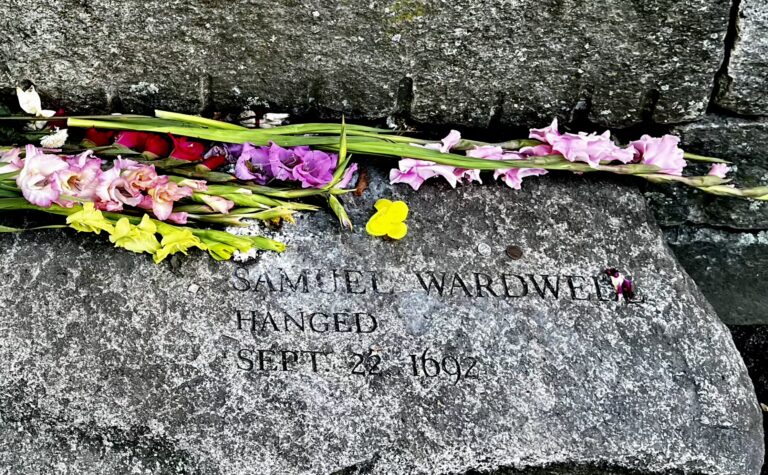
To save his own life, Samuel Wardwell told the court exactly what it wanted to hear: that he had signed his name in the devil’s book. Nearly everyone around him was doing the same, because by the autumn of 1692, confessing had become the one thing that seemed to keep a person off the gallows. But when his trial came, the Andover carpenter did something almost no one else dared. He took it all back, knowing full well it would kill him.
Samuel Wardwell was the last of the twenty people executed in the Salem Witch Trials, and his story is a fitting one to end on, a tale we always close with on our Salem Witch Trials walking tour. It asks the hardest question the trials ever posed: would you die for the truth, if a lie could save you?
SAMUEL WARDWELL AT A GLANCE
WHO – A 49-year-old carpenter from Andover — and a fortune-teller
WHAT UNDID HIM – His habit of reading palms and telling fortunes made neighbors suspect him
CONFESSED – September 1, 1692, because confessing seemed the only way to survive
RECANTED – At his trial, choosing the truth over a lie that might have spared him
EXECUTED – Hanged September 22, 1692 — the last of the twenty to die
An Andover carpenter with a curious hobby
Samuel Wardwell was born in Boston in 1643 and trained as a carpenter, following the building boom first to Salem and then to Andover. After his first wife died, he married a young widow named Sarah Hooper Hawkes, bought a good-sized farm, and raised a large family. By middle age he was a settled, respectable tradesman. But he had a pastime that set him apart: Samuel Wardwell told fortunes. He read palms, made predictions, and dabbled in the kind of folk magic that drew a crowd of curious young people in Andover. He treated it, by all accounts, as entertainment, a bit of harmless sport. In 1692, there was no such thing as harmless magic.
When a parlor trick becomes a death sentence
What made his fortune-telling dangerous wasn’t that people disbelieved it, it’s that some of his predictions seemed to come true. Neighbors later testified that he had foretold a woman would have five daughters before a son (she did), and that he had told a young man he was secretly in love and would come to grief (he did). One family was unnerved that Wardwell knew a youth had been sweet on a girl since the age of fourteen, a secret the young man had never spoken aloud.
“I wonder how Wardwell could tell so true.”
— John Bridges, recalling his son’s astonishment, from the court record, 1692
To us, that’s a village entertainer with a good eye for people. To frightened Andover in 1692, it was evidence of unnatural knowledge, and the whispers began.
The confession that was meant to save him
Samuel Wardwell was arrested in September 1692, and he was not the only one; his wife, his daughter, and his daughter-in-law were all accused as well. At his examination on September 1, Wardwell confessed almost at once. He spun a story the court recognized: that years earlier, heartbroken and discontented, he had met a mysterious figure, a “black man” who called himself prince and lord, and had agreed to serve him in exchange for a promise that he would never want for anything. He said he’d signed the devil’s book and been baptized in a river, though, he added, the devil had never actually delivered on the bargain.
Why confess to something that could hang him? Because, by that grim point in the trials, confessing was the one thing keeping people alive. Through the summer, only those who refused to confess were being tried and executed; confessors were held back. To plead innocent looked like a straight path to the gallows. Wardwell and his family chose what seemed the safer lie.
A family stripped to nothing
With both parents in jail, the Wardwell home collapsed. The sheriff descended on the farm and carried off nearly everything: the cattle, hogs, and horse, Wardwell’s carpenter tools, loads of hay, and six acres of corn still standing in the field. The younger children were left with no parents and no means. The Andover selectmen had to petition the court to place them: the older boys were sent off to live with relatives or apprenticed to learn trades, and the baby was handed to another family. In a matter of days, the trials had erased not just two people but an entire household.
He owned that the confession “was taken from his mouth… but he said he belied himself”, knowing he would die for it, whether he owned it or not.
— From Samuel Wardwell’s trial record, September 1692
He understood he would likely hang either way. The real choice before him wasn’t life or death; it was dying in a lie or dying in the truth. Samuel Wardwell chose the truth. The jury found him guilty, and he was sentenced to die.
September 22, 1692, the last to hang
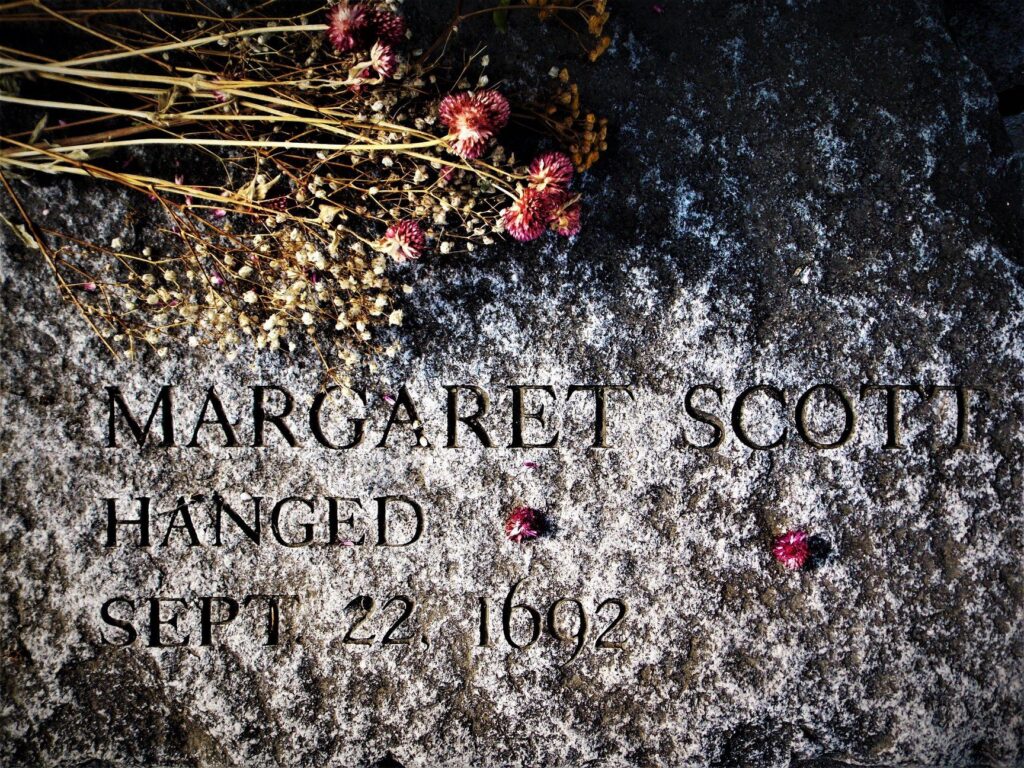
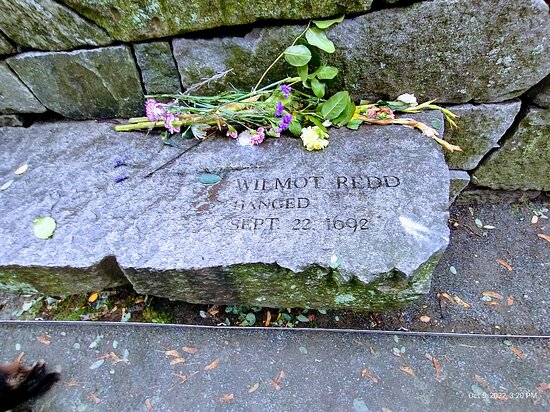
On September 22, 1692, Wardwell was taken by oxcart to Proctor’s Ledge with seven others: Mary Esty, Martha Corey, Ann Pudeator, Alice Parker, Mary Parker, Wilmot Redd, and Margaret Scott. The cart stuck fast on the hill, and the accusers cried that the devil was holding it back. Then came the strangest, most telling moment of all. Standing on the ladder, protesting his innocence to the crowd, Wardwell was interrupted when a puff of the executioner’s pipe smoke blew into his face and set him coughing. His accusers seized on it instantly:
“The smoke coming in his face interrupted his discourse; those accusers said that the devil did hinder him with smoke.”
— Robert Calef, eyewitness, on Samuel Wardwell’s execution, September 1692
A man was dying with a declaration of innocence on his lips, and even a stray breath of tobacco smoke was turned against him. Moments later, as the eight bodies hung, Reverend Nicholas Noyes delivered his infamous sneer: “What a sad thing it is to see eight firebrands of hell hanging there.” These were the final executions of the Salem Witch Trials.
THE LAST VICTIM
Where the killing stopped
Samuel Wardwell was the twentieth and last person put to death in 1692. His wife Sarah, condemned the following January, was spared when Governor Phips stayed the remaining executions, and by May 1693 a general pardon emptied the jails and ended the trials for good. It had come too late for Wardwell, but his death marks the exact place where Salem’s madness finally broke. Of all twenty, he is remembered for a single, searing choice: offered his life in exchange for a lie, he gave it back.
WALK HIS STORY
Hear the true story of all twenty victims
Our historian-led 1692 Salem Historical Tour tells the true stories of Samuel Wardwell and the other victims on the very streets where the trials unfolded. Two hours, all ages, $35 adults / $10 kids.
Frequently asked questions
Samuel Wardwell was a 49-year-old carpenter from Andover, Massachusetts, who was also known for telling fortunes and reading palms. He was one of the twenty people executed during the 1692 Salem Witch Trials, and the last person to be hanged, on September 22, 1692.
Wardwell’s habit of telling fortunes and reading palms made his Andover neighbors suspicious — especially because some of his predictions appeared to come true. In the fearful climate of 1692, that reputation for uncanny knowledge, combined with spectral accusations, was enough to have him arrested and tried.
Yes, at first. At his examination on September 1, 1692, Wardwell confessed to making a pact with the devil, as did his wife, daughter, and daughter-in-law. At that stage of the trials, confessing seemed to be the only way to avoid immediate execution, since only those who refused to confess were being tried and hanged.
By the time of his trial, the court had begun convicting and executing confessors too, so Wardwell realized a confession would no longer save him. Rather than die having falsely condemned himself, he recanted — saying he had “belied himself” — and chose to die telling the truth. He was found guilty anyway.
Samuel Wardwell was hanged on September 22, 1692, at Proctor’s Ledge in Salem, alongside Mary Esty, Martha Corey, Ann Pudeator, and four others. He was the last of the twenty people executed in the Salem Witch Trials; as he protested his innocence on the ladder, his accusers claimed the devil interrupted him with the executioner’s tobacco smoke.
Sources & further reading
This article draws on the original 1692 court records and firsthand accounts. To read the primary sources yourself:
- Samuel Wardwell’s court records (SWP No. 133) — Salem Witch Trials Documentary Archive, University of Virginia.
- The Salem Witch Trials Documentary Archive and Transcription Project — the full collection of original court records and transcriptions from 1692.