THE SALEM HISTORY JOURNAL
Field notes from 1692
Stories, facts, and the people behind the Salem Witch Trials. Written by the historians who lead the tours. No folklore for the sake of it. Just the history, told straight.
Featured • 6 min read
Forget the Myths and Legends - This Salem Tour Proves the Truth is Scarier
Salem’s reputation runs on ghost stories. But once you know what actually happened here in 1692, the real record turns out to be far more unsettling than anything invented for a haunted house. Here’s why.
Deep dive
The Salem Witch Trials:
A Day-by-Day Chronicle
From the first fits in the parsonage to the final pardons – the year of 1692 laid out in the order it happened.
For educators
Salem School Field Trip
Why Teachers love 1692 Salem History Tour
How a two-hour walk turns a textbook chapter into something students remember.
A life remembered
The Defiant Legacy of Giles Corey
“More Weight.” The two words an old farmer spoke as they crushed him, and why he refused to give his accusers what they wanted.
A life remembered
Rebecca Nurse: Resilience in Salem
A frail 71-year-old grandmother, respected by all, until a jury changed its own verdict. Her case shook the town’s faith in the trials.
A life remembered
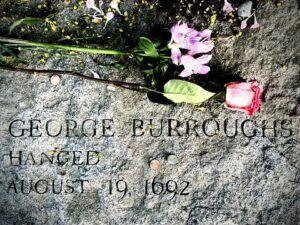
George Burroughs: The Minister’s Tragic Fate
He recited the Lord’s Prayer perfectly at the gallows, something no witch was supposed to do. The crowd nearly stopped it. Nearly.
Trip planning
20 Best Things to Do in Salem, MA
A local’s honest list. The places worth visiting and how to book tickets.
A life remembered
Susannah Martin:
History Revisited
Sharp-tongued and unafraid, she laughed at the charges against her. The court didn’t find it funny. A closer look at a misunderstood woman.
A life remembered
Sarah Good:
The Tragic Story of a Poor Woman Accused of Witchcraft
Her life, marked by tragedy and poverty, made her the perfect target for accusations of Witchcraft.
Where they lie
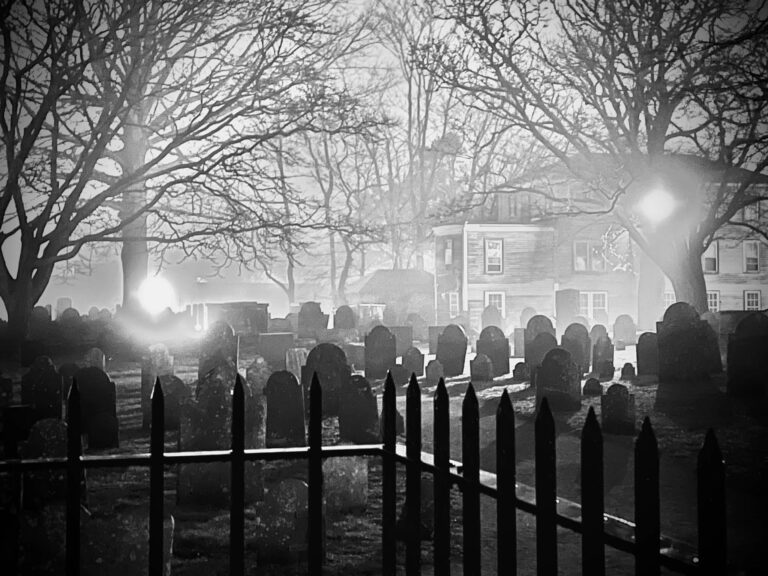
The Final Resting Place
of the 20 Victims
They were denied a proper burial, so where are they now? What the record says about where the twenty were laid to rest.
Setting it straight
5 Misconceptions About the Salem Witch Trials
No one was burned at the stake. That’s just the start. Five things almost everyone gets wrong about 1692.
Quick answers
3 Common Questions About the 1692 Salem Witch Trials
Who started it? How many really died? Could it happen again? The short, honest answers to what people ask us most.
Historic buildings
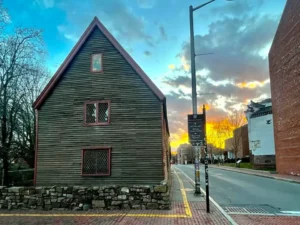
The Witch House and its Link to 1692
The Salem Witch House stands as a silent witness to one of the darkest chapters in American history.
A life remembered
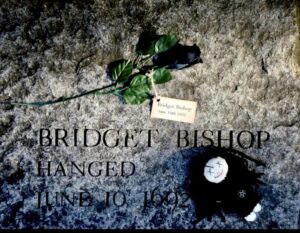
Bridget Bishop: The First Hanged in Salem
On June 10, 1692, a Salem woman named Bridget Bishop became the first person put to death in the witch trials. She was not the first accused, far from it. The court chose to try her first for a colder reason
A life remembered
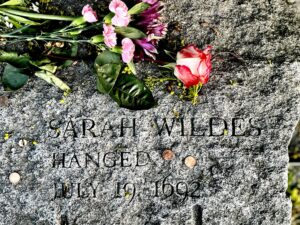
Sarah Wildes: The Accusations That Sent Her to the Gallows
Sarah Wildes was not hanged because anyone truly believed she was a witch. She was hanged because, nearly thirty years earlier, she had married a widower too soon, and his dead wife’s family never forgave her.
A life remembered
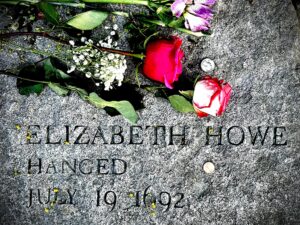
Elizabeth Howe: The Accusation That Couldn’t be Undone
A minister stood before the court and swore it under oath: the girl whose accusation would hang Elizabeth Howe had already taken it back. She had cleared Elizabeth to her face. The child, he said, had been coached by her own family.
A life remembered
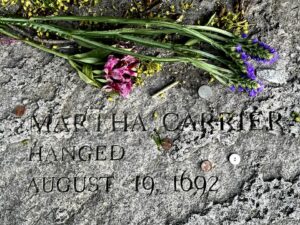
Martha Carrier: Condemned as the Queen of Hell
When the afflicted girls convulsed at her feet, she told the judges they were simply “out of their wits.” For that defiance, and for being a poor outsider a town had already decided to hate, she was branded the “Queen of Hell” and sent to the gallows.
A life remembered
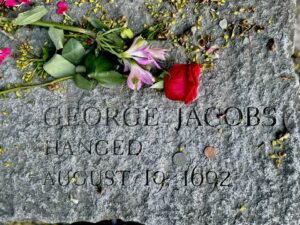
George Jacobs Sr.: “Burn Me or Hang Me, I Will Stand in the Truth”
He was an old man, tall, white-haired, so infirm he leaned on two canes just to stand. His own servant had accused him. His own granddaughter would soon be forced to name him.
A life remembered
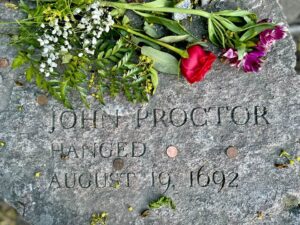
John Proctor: First Male to be Accused of Witchcraft
One of the most well-known victims from The Crucible, but almost everything most people “know” about John Proctor comes from Arthur Miller’s fictional story, not the historical record.
A life remembered
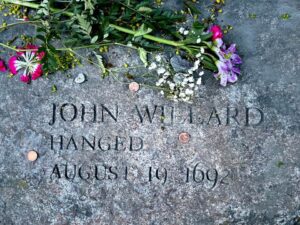
John Willard: The Constable Who Refused to Arrest the Innocent
His job was to bring the accused to jail. For a time, he did it. But when the court kept sending John Willard to arrest people he believed in his heart were innocent, something in him broke. He quit his job as a Constable, and within days, the machine he once served turned on him.
A life remembered
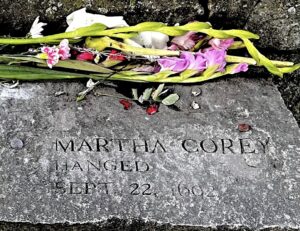
Martha Corey: The “Gospel Woman” Hanged as a Salem Witch
Martha Corey was a devout, church-covenanted woman who thought the whole witch hunt was nonsense, and wasn’t shy about saying so. When Salem accused her, it shattered the last comforting illusion the town had been clinging to: that only the poor, the odd, and the outcast had anything to fear.
A life remembered
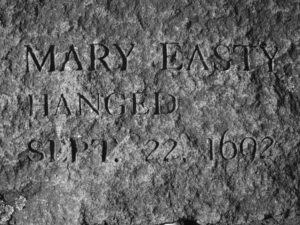
Mary Esty: The Woman Who Begged for Everyone but Herself
Condemned to hang, knowing nothing on earth could save her, Mary Esty picked up a pen and wrote to the judges who had sentenced her. She did not plead for her own life. She begged them, instead, to stop, so that no more innocent people would die after she was gone.
A life remembered
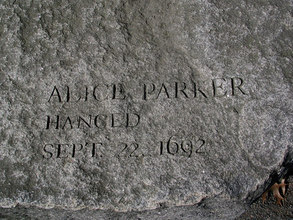
Alice Parker: The Fisherman’s Wife Hanged Over Old Grudges
A broken promise to mow some hay. A sailor who never came home from sea. A sick woman found lying in the snow. These were the “crimes” that hanged Alice Parker. In the Salem of 1692, a blunt fisherman’s wife with poor health and a sharp tongue had everything she needed to be called a witch and nothing at all to protect her.
A life remembered
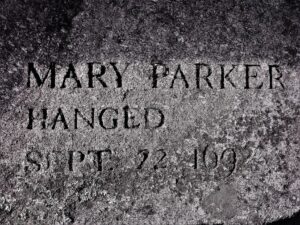
Mary Parker: The Andover Widow They May Have Hanged by Mistake
She stood before the Salem court and said the one thing no one wanted to hear: there was another woman by her name in Andover. She may well have been right. Mary Parker was a respectable widow with no enemies and no record of trouble, and to this day, historians suspect that Salem, in its blind panic, may have hanged the wrong woman.
A life remembered
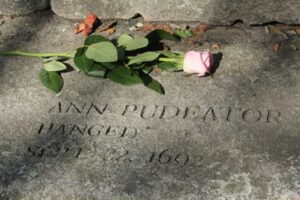
Ann Pudeator: The Wealthy Widow Whose Healing Became Witchcraft
She had everything a witch hunt looks for: money, independence, medical skill, and a past the town loved to whisper about. So when the constable searched Ann Pudeator’s house and found jars of ointment, the ordinary supplies of a midwife and healer, Salem decided it had found the devil’s own medicine. A wealthy, twice-widowed woman who knew how to heal was exactly the kind of person 1692 was built to destroy.
A life remembered
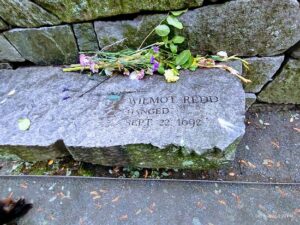
Wilmot Redd: The Woman Behind Marblehead’s “Mammy Redd” Legend
Long before Salem’s accusers ever spoke her name, the fishing town of Marblehead already had its witch. They called her “Mammy Redd,” and told one another dark stories of curdled milk and curses laid on the cradles of children. But peel away three centuries of folklore, and Wilmot Redd was something far more ordinary, and far sadder: a disliked old fisherman’s wife, hanged on a grudge and a girl’s say-so.
A life remembered
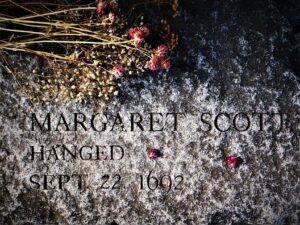
Margaret Scott: The Salem Victim Known Only Through Her Accusers
What actually happened at Margaret Scott’s trial is, in large part, a mystery. Most of the papers from her case- her arrest, her examination, her death warrant- have simply vanished. What survives comes almost entirely from one lopsided source: the depositions of the neighbors who accused her.
A life remembered
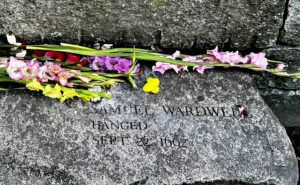
Samuel Wardwell: The Fortune-Teller Who Confessed to Live, Then Chose to Die Honest
To save his own life, Samuel Wardwell told the court exactly what it wanted to hear: that he had signed his name in the devil’s book. Nearly everyone around him was doing the same, because by the autumn of 1692, confessing had become the one thing that seemed to keep a person off the gallows. But when his trial came, the Andover carpenter did something almost no one else dared. He took it all back, knowing full well it would kill him.
The Judges
The Judges of the Salem Witch Trials: The Men Who Held the Power of Life and Death
By the spring of 1692, the Salem jails were overflowing with accused witches, and there was no proper court to try them. Massachusetts had been operating without a legal charter for years, and the new governor, Sir William Phips, had only just arrived. On May 27, 1692, Phips created a special court to clear the backlog: the Court of Oyer and Terminer, an old legal term meaning “to hear and determine.” He appointed nine magistrates to it.

The Accusers
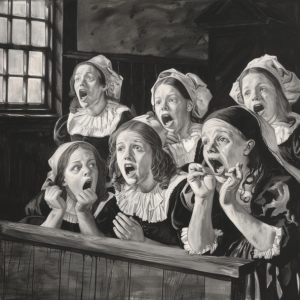
Abigail Williams: The 11-Year-Old Who Helped Ignite Salem, and Then Vanished
Abigail Williams was born in July, 1680, which made her eleven years old in the winter of 1692. She lived in the Salem Village parsonage as the niece and ward of the village minister, Reverend Samuel Parris. Her parents are presumed to have died, though exactly why she was living in her uncle’s household has never been established.
THE SALEM DISPATCH
History worth reading, once a month
New stories from the trials, forgotten names, and what’s happening in Salem – sent straight from the people who walk these streets every day. No spam, ever.