Salem Witch Trials
Abigail Williams: The 11-Year-Old Who Helped Ignite Salem — and Then Vanished
By Lori, History writer & tour co-founder • October 2026 • 11 min read
Most people think they know Abigail Williams. They picture a scheming teenager, desperate to win back a married lover, who burns a whole town down out of jealousy. That’s the version Hollywood and the high-school stage gave us. The real Abigail Williams was an eleven-year-old girl, and the truth of what she did, and what became of her, is stranger and sadder than any play.
She was one of the two children whose fits set the entire Salem panic in motion, and she became one of its most relentless accusers. Then, almost as suddenly as she appeared, she disappeared from history altogether. On our Salem Witch Trials walking tour, hers is one of the names that surprises people most.
ABIGAIL WILLIAMS AT A GLANCE
WHO – The 11-year-old niece and ward of Rev. Samuel Parris of Salem Village
HER ROLE – One of the first and most active accusers of the entire panic
THE SCALE – Linked to accusations against dozens of people; formally testified against eight
THE MYTH – Arthur Miller’s The Crucible aged her to 17 and invented an affair with John Proctor
HER FATE – Last testified June 3, 1692, then vanished from the record; her grave is unknown
The girl in the parsonage
Abigail Williams was born in July, 1680, which made her about eleven years old in the winter of 1692. She lived in the Salem Village parsonage as the niece and ward of the village minister, Reverend Samuel Parris. Her parents are presumed to have died, though exactly why she was living in her uncle’s household has never been established.
She shared that house with Parris’s young daughter Betty Parris and with the two people the family enslaved, Tituba and John Indian. It was an ordinary enough arrangement for the time. Within a few months, it would become the epicenter of the deadliest witch hunt in American history.
Where it began: the winter of 1692
According to the minister John Hale, some of the girls of Salem Village had been dabbling that winter in a bit of folk fortune-telling, dropping an egg white into a glass of water and reading the shapes it formed, a trick sometimes called a “venus-glass.” The game is said to have turned frightening when the shape one of them saw looked like a coffin. For children raised to believe the Devil was real and always near, that was a terrifying omen.
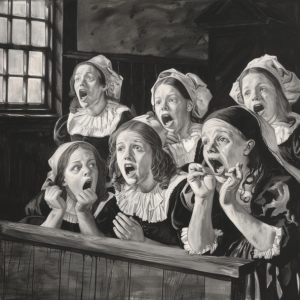
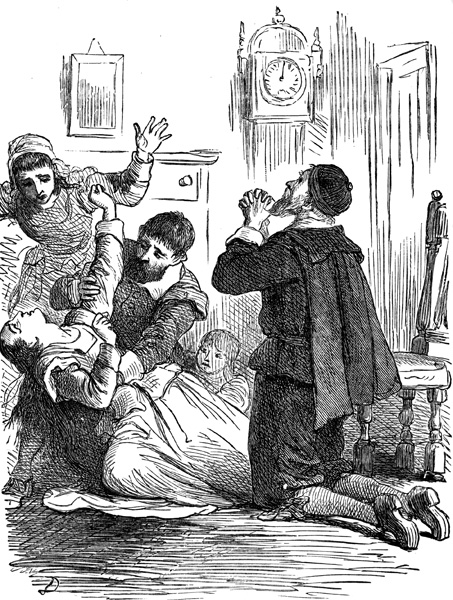
In January 1692, Abigail and Betty began to behave in ways no one could explain. They screamed, contorted their bodies, complained of being pinched and bitten by invisible hands, and fell into violent fits. By the end of February, Parris had called in a doctor, believed to be William Griggs, who could find nothing physically wrong and concluded the girls were under an “evil hand.” In a culture primed to fear witchcraft, that verdict was a spark on dry tinder.
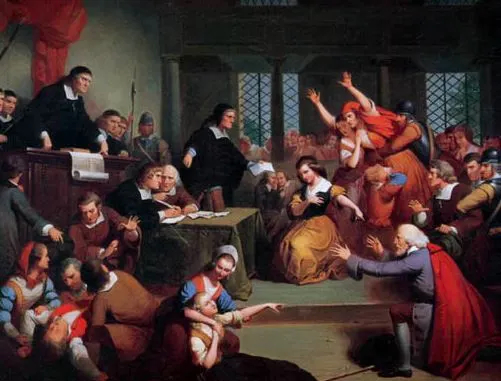
Pressed to say who was tormenting them, the afflicted girls named three women: Tituba, the beggar Sarah Good, and the sickly, reclusive Sarah Osborne, all easy targets at the margins of the community. They were examined on March 1, 1692. And then Tituba did the thing that blew the whole case wide open: she confessed, describing a shadowy world of witches and a book of the Devil, and claimed there were others out there still unnamed. The hunt was on.
One of the loudest voices in the room
Abigail did not fade into the background after those first accusations. She became one of the most visible and dramatic of the afflicted, and we know this largely because a visiting minister named Deodat Lawson wrote down what he saw. His account preserves some of the most chilling moments of the early panic.
On March 19, Lawson watched Abigail thrash through a fit at the parsonage, crying out at an invisible specter that was offering her the Devil’s book:
“I wont, I wont, I wont take it…”
— Abigail Williams, recorded by Rev. Deodat Lawson, March 1692
The next day, a Sunday, she interrupted the church service itself, something almost unthinkable for a child in that society. Lawson recalled her calling out to him in the meetinghouse to “stand up, and name your text,” and then, with the accused Martha Corey sitting in the congregation, Abigail cried that she could see a yellow bird suckling between Corey’s fingers, a supposed witch’s familiar. On March 31, during a public day of fasting, she claimed to witness a ghastly witches’ sacrament, complete with red bread and a red drink she described as flesh and blood.
By the examination of Elizabeth Proctor and Sarah Cloyce on April 11, Abigail was naming names by the dozen, rattling off some forty people she claimed to have seen at the Devil’s gatherings. A frightened child’s visions were now shaping who lived and who died.
The scale of what followed
It is hard to overstate how central Abigail’s testimony was. Across the spring of 1692, her name appears in connection with accusations against 57 people, one of the heaviest tallies of any single accuser. For 17 of them her testimony would seal their fate at the gallows and one pressed to death: Bridget Bishop, Sarah Good, Elizabeth Howe, Susannah Martin, Rebecca Nurse, Sarah Wilds, Rev. George Burroughs, Martha Carrier, George Jacobs Sr., John Procter, John Willard, Martha Corey, Mary Esty, Alice Parker, Ann Pudeator, Wilmot Redd, and Giles Corey.
Five others died in filthy jail cells awaiting trial, while the lucky ones were acquitted, pardoned, or managed to escape. A child who had not yet turned twelve sat at the center of a machine that was killing her neighbors.
The myth of Abigail and John Proctor
This is where history and fiction part ways, and where almost everyone gets Abigail wrong. In Arthur Miller’s 1953 play The Crucible, Abigail Williams is a young woman of about seventeen who has had an affair with the farmer John Proctor and accuses his wife, Elizabeth, in a calculated bid to take her place. It is a brilliant piece of theater. It is not history.
The real Abigail Williams was eleven. John Proctor was a man of roughly sixty. There is no evidence the two had any relationship before the trials, and no record suggesting anything like the romance Miller imagined. Miller invented the affair and aged Abigail to make it plausible, giving his play about McCarthy-era America a human engine of jealousy and guilt. Generations of students have since mistaken his drama for the documented past.
HISTORY VS. HOLLYWOOD
Why the girls really turned on John Proctor
If it wasn’t a jilted love affair, why was Proctor accused? The likeliest answer is far less romantic. John Proctor was openly contemptuous of the afflicted girls. He called them liars, dismissed their fits as fraud, and reportedly said they should be whipped for the chaos they were causing. In the summer of 1692, publicly mocking the accusers was a dangerous thing to do, and Proctor paid for it with his life. The motive wasn’t passion. It may simply have been that he refused to play along.
The girl who disappeared
Abigail Williams gave her last recorded testimony on June 3, 1692, and then she was simply gone. She vanishes from the court records entirely, for reasons no historian has ever been able to explain. One of the most prolific accusers of the whole affair left the stage before the executions had even finished, and no one wrote down why.
When Parris was finally forced out of his pulpit by his disgusted congregation in 1697, Abigail most likely left Salem Village with him and Betty, but even that is a guess. Unlike the accuser Ann Putnam Jr., who in 1706 stood before the congregation and publicly apologized for her part in the deaths, Abigail Williams never recanted and never apologized, at least not in any record that survives.
There is an old claim that she died young, before the end of 1697, “no older than seventeen,” but historians regard it as unproven and possibly a case of mistaken identity. We do not know when she died, where she went, or whether she ever grasped what her testimony had done. Her grave, like so much else about her, is lost.
One of the panic’s loudest voices fell silent on June 3, 1692, and history never heard from her again.
SEPARATE FACT FROM FICTION
The real story behind The Crucible
Our historian-led 1692 Salem Historical Tour untangles the true history of the accusers and the accused from the myths that grew up around them — on the very ground where it happened. Two hours, all ages, $35 adults / $10 kids.
Frequently asked questions
Abigail Williams was an 11-year-old girl who lived in the Salem Village parsonage as the niece and ward of Reverend Samuel Parris. In 1692 she became one of the first “afflicted” girls and one of the most active accusers of the Salem Witch Trials, giving testimony that helped send numerous people to prison and the gallows.
Abigail Williams was about eleven years old in 1692, having been born around 1680. This is very different from the character in Arthur Miller’s play The Crucible, who is portrayed as a young woman of about seventeen.
No. The affair between Abigail Williams and John Proctor was invented by playwright Arthur Miller for The Crucible in 1953. In reality, Abigail was about eleven and Proctor was around sixty, and there is no historical evidence the two had any relationship before the trials. Historians consider the romance pure fiction.
Abigail Williams was connected to accusations against dozens of people during the trials, one of the largest tallies of any accuser. She formally testified against eight, including Rebecca Nurse, John and Elizabeth Proctor, and Mary Esty. Fifteen of the people she accused or testified against were ultimately executed.
Abigail Williams gave her last recorded testimony on June 3, 1692, and then disappears from the historical record for unknown reasons. She likely left Salem Village when Reverend Parris was dismissed in 1697. Unlike Ann Putnam Jr., she never apologized, and the date and place of her death are unknown.
Sources & further reading
This article draws on the original 1692 court records and firsthand accounts. To read the primary sources yourself:
- A Brief and True Narrative of Some Remarkable Passages Relating to Sundry — Deodat Lawson
- Abigail Williams Court Records (SWP No. 138) — Salem Witch Trials Documentary Archive, University of Virginia.
- The Salem Witch Trials Documentary Archive and Transcription Project — the full collection of original court records and transcriptions from 1692.